
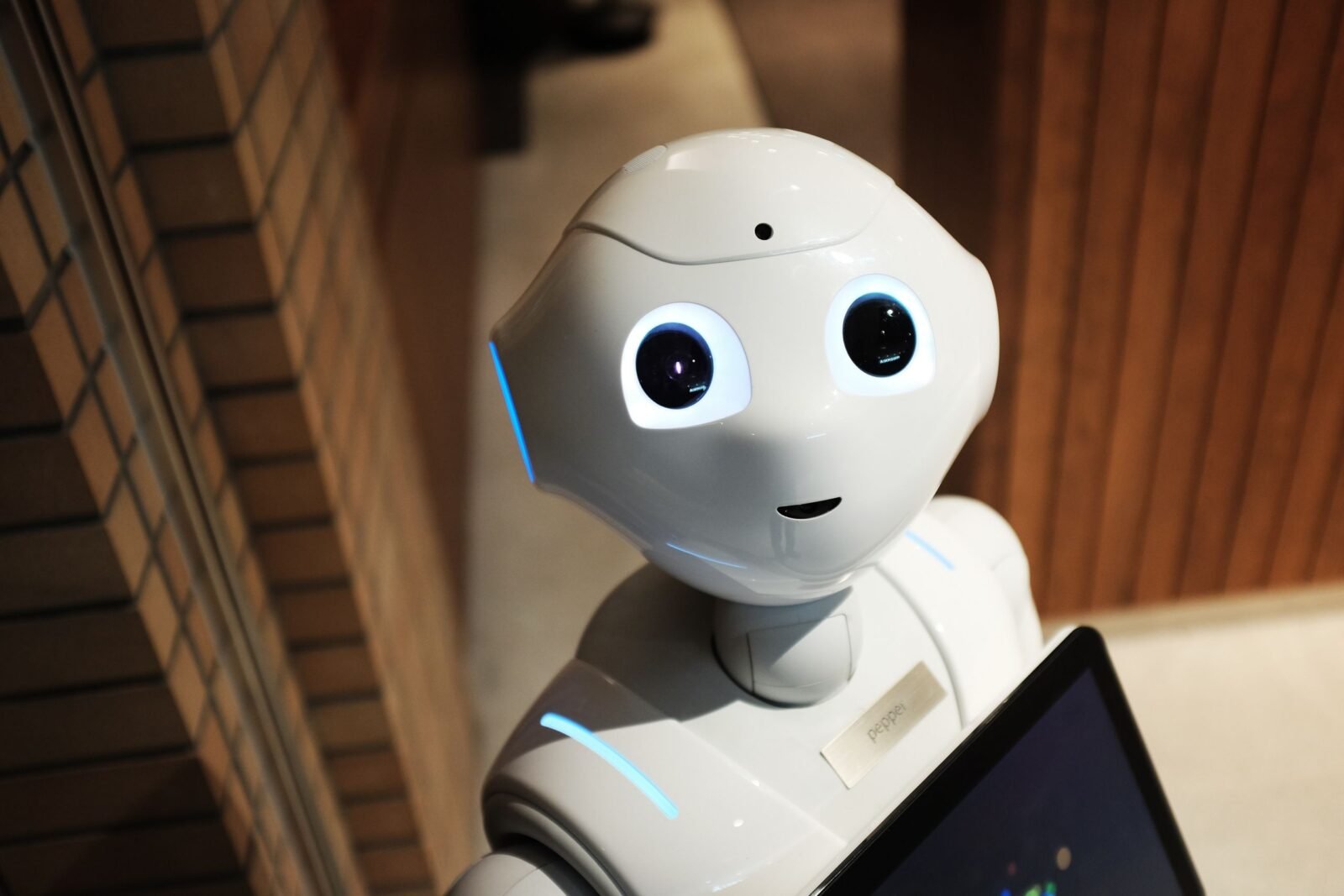
Artificial Intelligence Applications: Where AI Is Actually Used in Everyday Life
Artificial intelligence sounds futuristic, but its applications are already part of ordinary life. When your phone unlocks with your face, when a streaming service suggests what to watch next, or when a bank flags a suspicious transaction — that is AI at work, quietly, in the background.
So what are artificial intelligence applications, exactly? They are the practical jobs AI does in the real world: spotting patterns in large amounts of data, making predictions, understanding language and images, and automating repetitive work. AI itself is the technology; an application is what it is used for. If you want the building blocks first, our guide to what an algorithm is explains the step-by-step logic underneath all of this.
Here is where AI is actually being used today — not in science fiction, but in jobs and services people already rely on.
Healthcare
One of the most important applications of AI is in medicine. AI systems trained on large sets of medical images can help doctors spot early signs of disease in scans, such as changes in an X-ray or a retinal image, that a busy human eye might miss. This does not replace the doctor — it gives the doctor a second pair of eyes and a shortlist to check.
AI is also used to manage hospitals more smoothly: predicting which wards will be busiest, scheduling staff, and matching patients with the right specialist faster. In drug research, AI helps scientists sort through huge libraries of chemical compounds and narrow down the candidates worth testing in a lab, which can save years of trial and error.
Finance and Banking
Banks were among the earliest adopters of AI, and for a simple reason: they handle enormous amounts of transactions, and fraud hides in that volume.
- Fraud detection. AI watches transaction patterns in real time. If your card is suddenly used in another country minutes after a purchase at home, the system flags it — not because a person noticed, but because the pattern broke.
- Credit decisions. Lenders use AI models to assess risk from a borrower’s history, income, and repayment record, helping them decide faster and more consistently.
- Trading and forecasting. Financial firms use AI to analyse market data and news at a speed no human team could match, though the final investment decisions still carry human risk — AI predicts, it does not guarantee.
Customer Service
The chatbot on a company’s website is the AI application most people have actually talked to. Modern customer-service AI can answer common questions at any hour — tracking an order, resetting a password, explaining a bill — without making you wait in a phone queue.
The better systems know their limits: they handle the routine questions and hand the complicated or sensitive cases to a human agent, with the conversation history attached so you do not have to repeat yourself. Voice assistants on phones and smart speakers are the same idea applied to spoken language: understand the request, find the answer, and act on it.
Manufacturing and Industry
In factories, AI applications are mostly invisible — and that is the point. Sensors on machines feed data to AI models that predict when a part is likely to fail, so maintenance happens before a breakdown stops production. This is called predictive maintenance, and it is one of the clearest cases where AI saves real money: a planned repair is far cheaper than an unplanned shutdown.
AI also inspects products on the production line. Cameras and image-recognition software check for defects — a scratch, a missing component, a misprinted label — far faster and more consistently than a human inspector staring at thousands of identical items.
Agriculture
Farming may seem far from AI, but it is one of the fastest-growing areas of application. AI analyses satellite images and drone photos to spot crop stress, disease, or irrigation problems early, field by field rather than farm by farm. That lets farmers treat only the affected area instead of spraying an entire field.
AI also helps with weather and yield predictions, so farmers can plan planting and harvesting with better information, and automated equipment can plant, water, and harvest with precision — using less water, fertilizer, and fuel in the process.
Transport and Navigation
Every time you follow a GPS route that reroutes around traffic, you are using an AI application. Navigation systems combine live traffic data, road closures, and historical patterns to predict the fastest route right now, not just the shortest distance on a map.
Delivery and logistics companies use the same idea at a larger scale: planning routes for thousands of vehicles, predicting delivery times, and loading trucks efficiently. Self-driving vehicles are the most ambitious transport application — still limited and supervised in most places — but the driver-assistance features already in many cars, like lane warnings and automatic braking, are AI applications working today.
Education
In education, AI is mainly a personal tutor and a time-saver. Learning platforms adapt to each student: if you keep getting a type of maths problem wrong, the system offers more practice on exactly that topic instead of moving on. Teachers use AI to draft quizzes, grade routine work, and spot students who are falling behind earlier than a term-end exam would reveal.
Language-learning apps are another everyday example — they listen to pronunciation, correct mistakes instantly, and adjust difficulty as you improve. The honest limit here matters: AI can tutor, but it cannot replace a teacher’s judgement about a struggling student, and its answers still need checking.
Daily Life at Home
Some AI applications are so ordinary you may not notice them:
- Smartphone features. Face unlock, photo search (“show me pictures of the beach”), voice typing, and automatic photo enhancement all run on AI.
- Recommendations. Streaming, shopping, and music apps use AI to predict what you might like based on what you have watched, bought, or listened to before.
- Smart homes. Thermostats learn your routine and adjust heating, security cameras tell the difference between a person and a passing cat, and voice assistants control lights and appliances on command.
- Accessibility. Live captions, screen readers, and real-time translation help people with hearing or vision difficulties use technology independently — one of AI’s most genuinely useful roles.
Business and Marketing
Beyond customer service, businesses use AI to understand their customers better: which products sell together, when demand rises, and which messages people actually respond to. AI writes first drafts, summarises long documents, and sorts support tickets by urgency — freeing people for the work that needs judgement, creativity, or a personal touch.
Small businesses benefit too. Tools that were once only affordable to large companies — automated bookkeeping, targeted advertising, inventory forecasting — are now available as simple online services powered by AI in the background.
Environment and Public Services
AI is also applied to problems bigger than any one company. Weather models use AI to improve forecasts, energy grids use it to balance supply from solar and wind with demand, and conservation projects use image recognition to count wildlife from camera-trap photos. Cities use AI to manage traffic lights, predict water leaks in pipes, and plan public transport routes around real usage patterns.
The Honest Limits
AI applications are powerful, but they have limits worth knowing before you trust them blindly:
- AI learns from data — and data can be biased or incomplete. A system trained on narrow examples will give narrow, sometimes unfair, answers.
- AI predicts, it does not understand. A chatbot can write a confident-sounding answer that is simply wrong, which is why important decisions still need a human check.
- AI needs oversight. In medicine, finance, and driving, the safest setups keep a human in charge, with AI as the assistant rather than the decision-maker.
Knowing these limits is part of understanding AI applications, not a reason to dismiss them. The best uses pair AI’s speed and pattern-spotting with human judgement.
Frequently Asked Questions
What is an artificial intelligence application?
An artificial intelligence application is a real-world use of AI technology — a specific job AI performs, such as detecting fraud, recognising faces in photos, answering customer questions, or predicting machine failures. AI is the technology; the application is what it does for people.
What are the most common applications of AI?
The most common applications today are in customer service (chatbots and voice assistants), finance (fraud detection and credit scoring), healthcare (medical image analysis), recommendations (streaming and shopping suggestions), navigation (traffic-aware routing), and manufacturing (predictive maintenance and quality inspection).
Is AI used in everyday life?
Yes, every day. Face unlock, photo search, voice typing, spam filters, navigation apps, recommendations, and smart-home devices are all AI applications most people use without thinking about them.
What is the difference between AI and an AI application?
AI is the broad field of technology that lets machines learn patterns and make predictions from data. An AI application is one concrete use of that technology in a particular area — for example, a hospital using AI to help read scans is one application of the wider technology.
Will AI replace human workers?
AI mainly replaces repetitive, pattern-based tasks, not whole jobs. In most fields it changes what people spend their time on — less routine checking and data entry, more judgement, creativity, and personal interaction. Roles that need empathy, complex decisions, or physical skill in unpredictable settings are the hardest for AI to replace.
Bottom Line
Artificial intelligence applications are no longer a future promise — they are the fraud alert on your phone, the route that dodges traffic, the scan a doctor double-checks, and the chatbot that answers at midnight. The technology is the same underneath: find patterns in data, predict, and act. What changes is where it is applied, and the applications that last are the ones that solve a real problem while keeping a human in charge of the final decision.

One Comment