What Is Robotics? How Robots Work and Where They Are Used
Robotics is the field of designing, building, and using robots — machines that can sense their surroundings, decide what to do, and carry out physical actions, such as moving, lifting, sorting, or cleaning. It brings together mechanical engineering (the body), electronics and sensors (the senses), and computer software (the control and decisions) in a single working machine.
That definition matters because it separates a robot from an ordinary automatic machine. A robot vacuum that maps your rooms, avoids the stairs, and returns to its charger is one. A washing machine running a fixed programme, however clever, mostly is not — it follows one set routine without perceiving or reacting to the world around it. Here is how robots work, the main kinds in use today, and how the field connects with artificial intelligence.
The Parts Every Robot Has
Almost every robot, from a warehouse arm to a delivery rover, is built from the same four ingredients:
- A body and moving parts. Arms, wheels, grippers, legs, or propellers — moved by electric motors or other actuators. This is the mechanical side, and it decides what the robot can physically do.
- Sensors. Cameras, distance sensors, touch and pressure sensors, microphones, gyroscopes, and similar devices that gather information about the robot’s surroundings and its own position.
- A controller. A computer — sometimes small and built in, sometimes powerful — that takes in the sensor information and decides what the moving parts should do next.
- Power. Batteries for mobile robots, mains power for fixed industrial ones. Power is a real limit: it is one reason most robots still work in short, planned bursts rather than all day like a person.
Remove any one of these and the machine stops being a robot in the full sense. A camera on its own only watches; a motor on its own only spins. The combination is the point.
Sense, Think, Act — the Loop That Makes a Robot
Robots work through a continuous loop with three steps:
- Sense. The robot gathers information: the camera sees a box, the distance sensor reports a wall ahead, the gripper feels resistance.
- Think. The controller processes that information against its instructions and goals: the box is the one to pick up; the wall means turn left; the resistance means the grip is secure.
- Act. The motors move — wheels turn, the arm lifts, the gripper closes.
Then the loop repeats, many times per second. This constant sensing and correcting is what lets a robot cope with a world that is never perfectly tidy: a parcel slightly out of place, a chair moved since yesterday, a person walking through its path. Early industrial robots barely sensed at all — they repeated one motion blindly, which is why they worked inside safety cages. Modern robots sense constantly, and that is what allows them to share space with people.
Where Robots Are Used Today
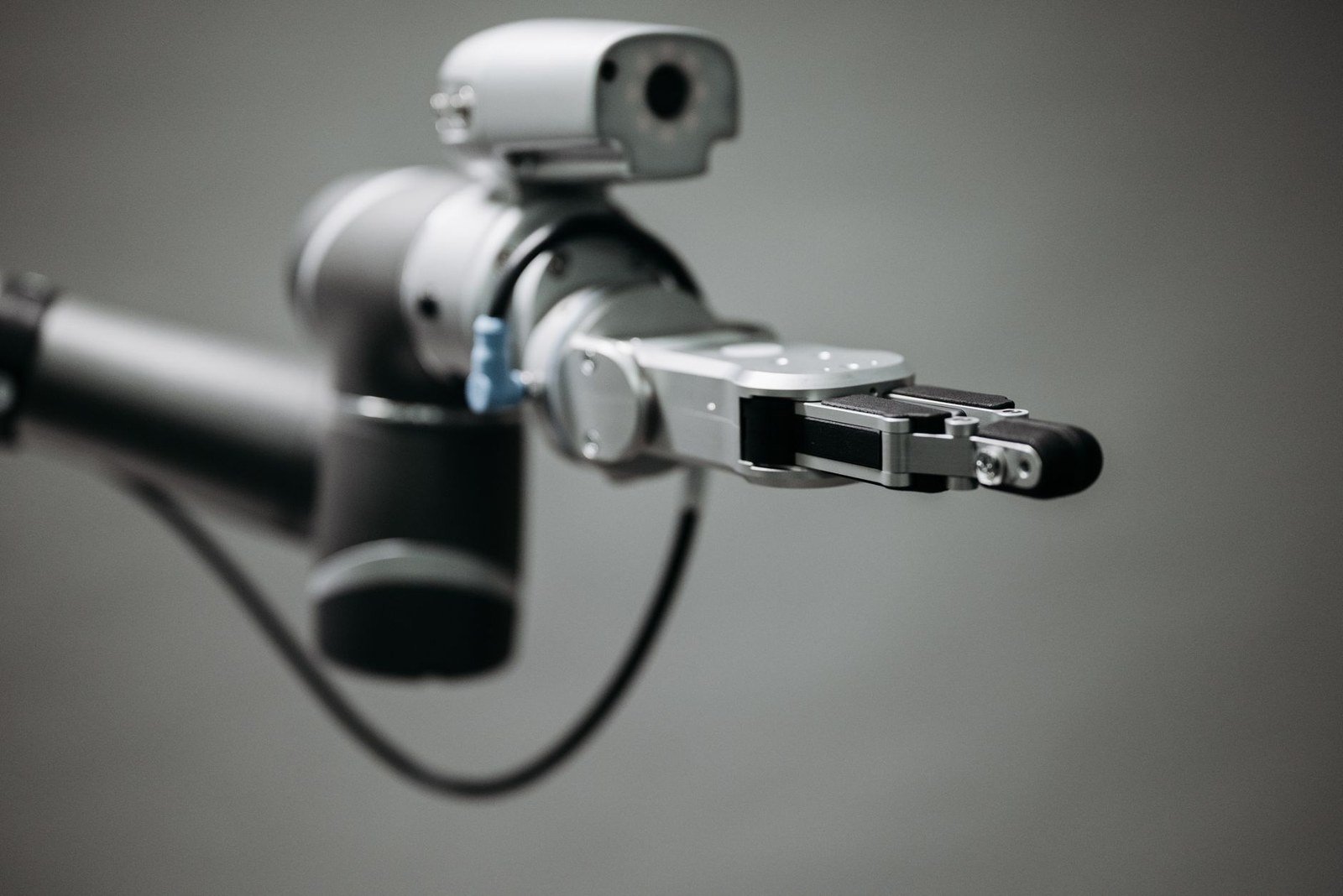
Factories. The oldest and still the largest home of the field. Robot arms weld, paint, assemble, and pack on production lines, doing the same precise motion thousands of times without tiring. Their strength is consistency, not versatility: retooling one for a new job is a project, not an afternoon.
Warehouses and logistics. Robots carry shelving units to human pickers, sort parcels, and move stock around the clock. Online shopping at modern speed quietly depends on fleets of these machines.
Homes. The robot vacuum is the most common robot in everyday life, joined by robot lawn mowers and pool cleaners. They are simple compared with industrial machines, but they demonstrate the full sense–think–act loop in a product anyone can buy.
Medicine. Surgical robots let doctors operate through tiny openings with instruments that filter out hand tremor — the surgeon controls every movement; the robot adds steadiness and reach. Hospitals also use robots to deliver medicines and linens, disinfect rooms, and help patients with rehabilitation exercises.
Farms, skies, and difficult places. Agricultural robots plant, weed, and harvest; drones inspect roofs, power lines, and crops; and robots go where people cannot safely go — inside disaster rubble, deep underwater, and on other planets, where every famous rover is a robot operated with enormous patience across a time delay.
Robotics and AI — Related, but Not the Same Thing
Robotics and artificial intelligence overlap, but they are not synonyms. One is about machines acting in the physical world; AI is software that finds patterns and makes decisions. Plenty of robots use little or no AI — a factory arm following a precise programmed routine does its job without needing to learn anything. And most AI never touches the physical world at all, working purely on text, images, and numbers — our tour of artificial intelligence applications shows how wide that purely digital side already is.
The two combine when a robot needs to handle variety rather than repetition: recognising different objects, understanding spoken instructions, or learning from trial and error. That learning side is where techniques like what deep learning is come in — systems trained on many examples rather than programmed rule by rule. A robot vacuum deciding a sensible route is using a little of this; a humanoid robot that can tidy an unfamiliar room would need a great deal of it, which is one reason that remains genuinely hard.
What a Robot Is Not
A few common confusions are worth clearing away:
- Not every automatic machine is a robot. A thermostat switches heating on a fixed rule; a lift goes where it is told. Without sensing and reacting to changing conditions, it is automation, not robotics — though the boundary can blur as machines gain sensors.
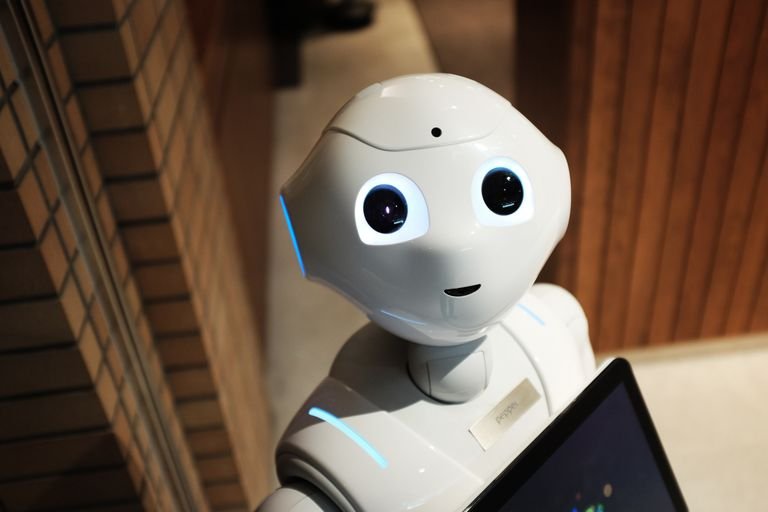
- A robot is not necessarily human-shaped. Most working robots are arms, boxes on wheels, or drones. The humanoid form is useful mainly where the environment is built for humans — stairs, doors, tools — and it is far harder to build than it looks.
- Software alone is not a robot. Chatbots and voice assistants are sometimes called “bots,” but with no body, sensors, or physical action, they belong to software, not to this field.
- Robots do not understand like people do. A robot that navigates a hospital corridor superbly has no general grasp of the world; it is excellent inside the narrow job it was built and programmed for, and helpless far outside it.
Robots, Jobs, and Safety — the Honest Picture
Robots reliably take over work that is dull, dirty, or dangerous: welding fumes, heavy lifting, repetitive packing, inspecting unsafe structures. That genuinely protects people, and it also genuinely changes jobs — some routine roles shrink as robots spread, while new work appears in building, programming, supervising, and maintaining the machines. The fair summary is that robots change the mix of work rather than simply deleting it, and the transition is easier in some industries than others.
Safety is a designed feature, not an afterthought. Traditional industrial robots work behind barriers because a fast-moving arm cannot sense a person in time. Newer collaborative robots (“cobots”) are built to work beside people: they move more slowly, limit their force, and stop on contact. Even so, the rule in any workplace is the same as with any powerful machine — the technology is safest where it is set up properly, maintained, and treated with respect.
Frequently Asked Questions
What is robotics in simple words?
Robotics is the field of building machines that can sense their surroundings, make decisions, and act on them physically — moving, lifting, sorting, cleaning. It combines a mechanical body, sensors, and computer control into one system.
Does every robot use artificial intelligence?
No. Many robots follow fixed programmed routines and use no AI at all — a factory arm repeating one exact motion is the classic example. AI is added when a robot must recognise things, handle variety, or learn, rather than repeat.
What is the difference between a robot and a machine?
An ordinary machine does its task the same way regardless of what is happening around it. A robot senses its environment and adjusts its actions in response — that sensing-and-reacting loop is the difference.
Are robots going to replace human workers?
They replace specific tasks, especially repetitive, heavy, or hazardous ones, rather than whole people. Some jobs shrink, others grow — including the work of building, programming, and maintaining robots. The change is real but gradual, and it differs a lot by industry.
What was the first robot?
Machines that did automated work go back centuries, but the first widely recognised industrial robot was Unimate, installed on a car production line in the early 1960s to handle hot metal parts. The word “robot” itself is older — it comes from a 1920 play and a Czech word associated with forced labour.